01 Home 02 Services 03 Work 04 About 05 Careers Get in Touch

Built around
premier work,
not scale.

Well Told is a creative co-development studio — art, animation, and content authoring for game teams. The visual and narrative layer of your game, not the code underneath. We started in 2015, and for ten years we've been embedded in other studios' productions: funded indie teams, AA studios with shipped titles, and the occasional specialized senior scope inside a AAA pipeline. We've shipped characters, worlds, trailers, and animation systems for PlayStation, Netflix, Meta Quest, Apple Arcade, and Steam.

We built Well Told around one conviction: the vendor model is broken. PM layers, quality drift, revolving contributor doors — we've seen what that does to a production. So we built the opposite: a tight network of senior and principal-level contributors who embed in your team, work in your tools, and stay through ship.

We're committed to staying lean, optimized, and specialized. The senior-contractor model is permanent — scaling up would mean averaging down quality. After ten years we're still excited about the work.

The leads.

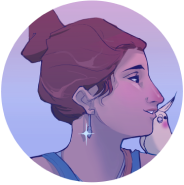
Jen Re

Jen Re

Animation Director

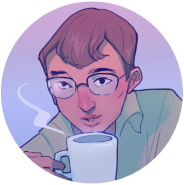
Carsen Kelliher

Carsen Kelliher

Characters · Narrative
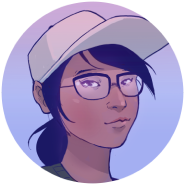
Zara Abraham

Zara Abraham

Studio Manager

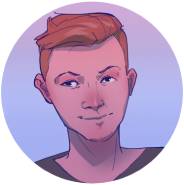
Derek O'Dell

Derek O'Dell

Business Manager

Our extended team.

Michaela Nienaber

Michaela Nienaber

Concept Art

Marc Meler

Marc Meler

Environmental · Design

Quoc Nguyen

Quoc Nguyen

Character Animation

Nicholas Saucedo

Nicholas Saucedo

Camera Animation

Our values.

01 — Story-Rich Design

Story comes first.

Great gameplay and worldbuilding start with character, emotion, and story. Everything we build — from cinematics to concept art — serves the deeper narrative vision.

02 — Creative Agility

Lean teams, no PM friction.

As a small but senior team, we thrive in fast-moving environments. Direct communication, no PM layer. We adapt to your workflow, not the other way around.

03 — Senior-Only Output

No junior bench.

Every contributor has shipped multiple titles. We don't run a junior bench. The output reflects that — and so does the rate.

Things studios ask.

What do you specialize in?
Our founding team is a mix of specialists and generalists with CG pipeline experience spanning indie to AAA standards, and we're fluent from Unity to Unreal. We've found our niche in teams of roughly fifteen to forty people — the premium indie, triple-I, and double-A studios. Work at that scale takes a particular blend: the multi-hat versatility of indie development paired with the deep specialization to execute each task at a high bar. That's exactly where we're built to operate. In practice it means we plug in three ways: expanding a department's capacity, reinforcing its leadership, or scaling production up in any discipline.
Do you do programming or engine work?
We do plenty of work in-engine — implementation and setup of visual content, technical art, and game design experience for things like level art and design. What we're not is engineers. We don't write gameplay code, network code, or low-level engine systems. Think of us as the creative arm that fills in and supports your non-engineering departments, not a stand-in for your engineering team. Where the work crosses into code, we hand it off to your engineers cleanly and document it for them.
How do you structure a co-development engagement?
Two ways, and they aren't mutually exclusive. We're at our strongest owning an entire pipeline end to end — the full character pipeline or animation pipeline, for instance — where our depth lets us move efficiently without giving up quality. Just as often, we structure ourselves to fill only the gaps you actually have. Take a look at our services to get a sense of where we can slot into your team and your production; from there we shape the engagement around what you're missing rather than what you already cover.
How do you structure your teams?
We're California-based and senior-level by default, and how we organize comes down to your preference — we scale the structure to fit how you want to work. At one end, we fold directly into your department: you have access to speak with every contributor we bring on and work with each as an independent contractor, while we handle the onboarding and the logistics of cycling people in and out. At the other end, for larger or more complex efforts, we operate as our own self-contained department — you deal with us as a unit, and we pull in resources and staff the most specialized person for the task at hand. A complex creature rig, for instance, might mean bringing in a specialist for a week or two to own exactly that part of the pipeline. Either way, matching the right person to the right task is most of what we do.
How do you integrate and communicate with our team?
However your studio communicates, we meet you there — we'll join your Slack or Discord, or help set one up. The bigger difference is what we don't require. Most outsourcing vendors need you to staff an outsource manager or art lead to translate, direct, and facilitate the relationship. We don't. We integrate directly, work like part of your team, and manage scaling up and down as production demands — so that coordination weight stays off your plate.
What's the scope or size of commitment?
Whatever the work actually needs. We've staffed everything from a single prop artist for a short stretch to a team that grows from two animators one month to five the next. Scaling with your production schedule is the point, not the exception. When you commit headcount on a monthly retainer, we offer bulk pricing.
What are your co-development terms? Do you white-label?

Our rates vary by the kind of studio you are — indie budgets and standard AA-and-up budgets look different, and we price for each. Beyond the base fee, certain co-development terms can bring your upfront cost down: front-facing brand visibility, a credit on your Steam store page, or a revenue share. None of that is expected, though — most of our engagements are white-label, with an upfront fee and none of those strings.

For white-label engagements, co-developer credit and Well Told branding on your game are never a requirement. All we ask is to share some of the behind-the-scenes process on our work pages, and to be listed in the game's credits alongside everyone else who contributed.

How is the work order structured?
We're flexible here and defer to how you'd prefer to structure the agreement. Generally, once an MSA is in place, we prepare a bid with an estimated headcount that goes into a SOW or work-order agreement. From there, we've worked a couple of ways: drafting a fresh work-order estimate at each key milestone throughout the project, or setting a fixed baseline retainer for your primary staffing and invoicing any additional headcount or specialists at the end of the month. Whichever fits your production better.
Do you offer a trial period?
For a first-time collaboration, we understand the hesitation before committing to a longer-term project. Sometimes both sides want to test things out first — especially when we're being evaluated as a partner for an entire game production that spans a year or more. Depending on the scope of the full project, we offer a discounted trial period for the first month, so we can see how our teams work together before stepping into the longer commitment.
Do you use AI?
There is no AI in our creative game development. Full stop. We may use scripts or tooling built with the help of AI coding tools like Claude Code, and we use AI administratively outside of production — finance, marketing, that sort of thing. But generative AI for art or storytelling isn't something we believe in, and we keep a clear line between the two.
Where are you NOT the right fit?

We're a senior, leadership-focused team, and we're priced like one. If you mainly need a high volume of bulk execution at the lowest rate, an offshore studio is honestly the better fit — and we'll tell you so. Paying a premium for a dozen artists doing routine production isn't efficient for anyone. Where we're worth it is technical complexity and the high-trust work that's risky to hand off cheaply — the parts that have to actually work, and work right. You get what you pay for; we trade in craft, not volume.

On style, we're strongest in stylized work and stylized realism — not hyper-realism or military-shooter-style games. That carries into how we build: we can work with mocap, but we believe keyframed, exaggerated animation and careful cleanup is what makes gameplay animation read clearly and land emotionally, and we favor hand-built models over photogrammetry and scans. If you're after full photorealism, that's not us — though with stylized realism we can get closer than you'd expect.

And one boundary we hold on the work itself: if your game leans on generative AI for its art assets, we're less interested in being part of it. We keep generative AI out of our own creative work, and we'd rather put our name on a game made the same way.

Do you take on experimental or prototype projects?
Sometimes. More developers are building games than ever, and it's increasingly realistic for a solo dev or small team to assemble a game from store assets and launch on Steam, or raise funding off the back of it. We usually work with projects that are already greenlit and funded — but we keep a limited number of slots open through the year for earlier-stage work. If you're building something with original IP and characters that could use the Well Told touch, we're open to structuring it around back-end revenue rather than a traditional upfront fee. This is newer territory for us, so we'd love to hear what you're working on.
Where are you located?
We work remotely across Southern California — LA, Irvine, and San Diego. Happy to connect with locals and meet the team in person.

Want to work
together?

Get in Touch
COPY EDIT MODE
Cmd/Ctrl+E to toggle